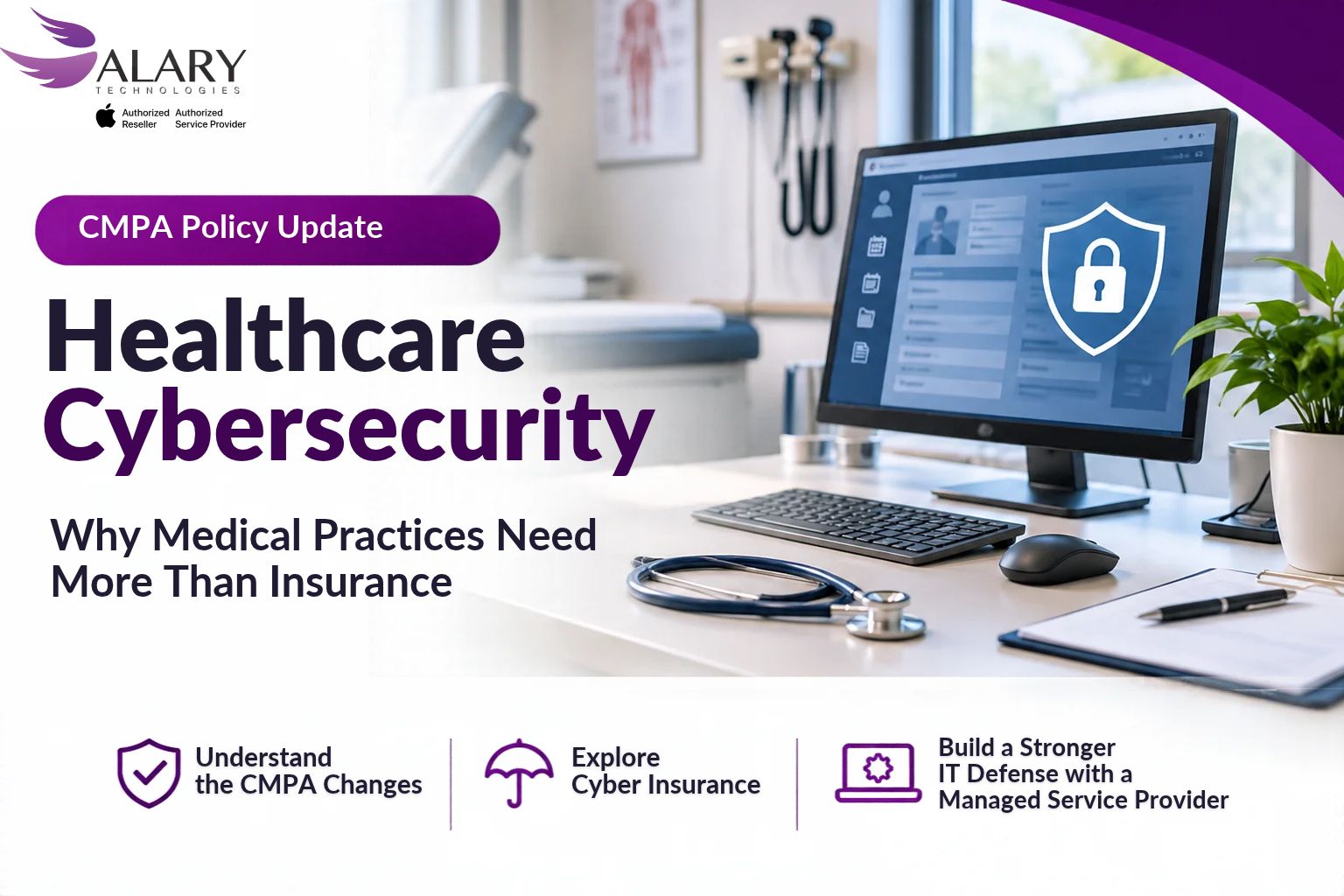
Healthcare cybersecurity is no longer optional. As Canadian medical practices increasingly rely on electronic medical records (EMRs), cloud-based applications, connected medical devices and digital communication systems, protecting sensitive patient information has become a critical responsibility.
Recent changes announced by the Canadian Medical Protective Association (CMPA) highlight the importance of cyber liability insurance, proactive cybersecurity and reliable managed IT services for healthcare providers.
For physicians, clinic owners and practice managers, the question is no longer whether cybersecurity is necessary, but whether their practice is adequately protected.
What Is Changing with the CMPA in 2026?
For years, Canadian physicians have relied on the CMPA for assistance with medico-legal matters arising from their professional activities. However, its updated position highlights important limitations regarding cybersecurity incidents and privacy breaches.
Effective September 25, 2026, the CMPA’s updated position excludes financial assistance for certain damages and settlements related to:
-
Improper collection, use or disclosure of personal health information
-
Privacy breaches
-
Cybersecurity incidents
While the CMPA continues to provide assistance with eligible privacy-related medico-legal matters, it is not an insurance company and does not provide comprehensive protection against the operational and financial consequences of cyberattacks.
Medical practices should not assume CMPA assistance will cover expenses such as:
-
Ransomware payments
-
Data recovery and restoration
-
Privacy breach notifications
-
Cybersecurity investigations
-
Hardware replacement
-
Regulatory fines and penalties
-
Cyber incident recovery
-
Privacy compliance consulting
Depending on the severity of an incident, these expenses can reach tens or even hundreds of thousands of dollars.
Why Healthcare Organizations Are Targets for Cyberattacks
Healthcare organizations manage some of the most sensitive and valuable personal information.
Even small medical practices can be attractive targets for cybercriminals because they store and process:
-
Electronic medical records
-
Patient contact information
-
Medical histories and prescriptions
-
Diagnostic images and test results
-
Billing and financial information
-
Personal identification information
Many medical clinics operate without a dedicated internal IT or cybersecurity department, making it difficult to identify vulnerabilities, monitor threats and respond effectively to security incidents.
Cybercriminals are also increasingly using artificial intelligence and automation to identify security weaknesses and target organizations of all sizes.
A Real-World Lesson: The Dr. Terry Dubrow Cyberattack
The reported cyberattack involving plastic surgeon Dr. Terry Dubrow’s medical practice demonstrates the importance of cybersecurity preparedness.
The incident reportedly exposed sensitive patient information, potentially including identification details, medical histories, prescriptions and medical images.
Although the practice reportedly had a $1 million cyber insurance policy, the incident highlights an important reality: insurance cannot prevent a cyberattack from happening.
Cyber insurance may help reduce certain financial losses following an incident, but proactive cybersecurity measures are essential for reducing the likelihood and impact of a breach.
Cyber Insurance Alone Is Not Enough
Cyber liability insurance is an important component of healthcare risk management. However, insurance should complement cybersecurity rather than replace it.
A cyberattack can disrupt patient appointments, prevent access to electronic medical records, interrupt communication and create significant operational challenges.
Medical practices need a layered cybersecurity strategy that combines:
-
Cyber liability and privacy breach insurance
-
Proactive IT monitoring
-
Endpoint protection
-
Secure data backups
-
Network security
-
Employee cybersecurity training
-
Incident response planning
-
Regular security assessments
Investing in prevention can help healthcare organizations reduce their exposure to costly disruptions and protect patient trust.
How Managed IT Services Help Protect Medical Practices
Managing healthcare IT infrastructure and cybersecurity internally can be challenging, particularly for small and medium-sized medical practices.
A healthcare-focused Managed Service Provider (MSP) can help organizations identify vulnerabilities, maintain secure systems and address technology issues before they become major disruptions.
Depending on the service agreement and the needs of the practice, managed IT services can include:
Network Security and Monitoring
Proactive monitoring, firewall management and secure network configurations help identify potential threats and reduce unauthorized access.
Endpoint Security and Device Management
Protecting computers, laptops, tablets and mobile devices helps reduce exposure to malware, ransomware and unauthorized access to sensitive patient information.
Multi-Factor Authentication (MFA)
Multi-factor authentication adds an additional layer of protection to user accounts, email platforms and critical healthcare systems.
Data Backup and Disaster Recovery
Regular, tested backups and disaster recovery strategies help medical practices restore essential information and resume operations following a technology failure or cybersecurity incident.
Email Security and Phishing Protection
Email security solutions and employee awareness training help reduce risks associated with phishing attacks, malicious attachments and compromised accounts.
Proactive IT Support
Regular system maintenance, software updates, vulnerability assessments and technical support help healthcare professionals focus on patient care rather than technology problems.
Healthcare Cybersecurity and Patient Safety
Cybersecurity is about more than protecting computers and networks. It is also about protecting patients.
Many cybersecurity incidents begin with seemingly minor issues:
-
An employee clicks on a phishing email.
-
A compromised password is reused.
-
A server misses an important security update.
-
A backup system fails without anyone noticing.
-
A former employee’s account remains active.
These vulnerabilities can disrupt access to patient records, delay appointments, interrupt clinical workflows and create significant privacy risks.
For healthcare providers, reliable IT infrastructure is an essential part of delivering consistent, effective patient care.
The Cost of Cyberattack Recovery vs. Cybersecurity Prevention
Some medical practices view cybersecurity as an additional operating expense. However, recovering from a cyberattack can be significantly more costly than investing in preventive measures.
Cyberattack recovery expenses may include:
-
Digital forensic investigations
-
Legal and regulatory assistance
-
Patient breach notifications
-
Data recovery and system restoration
-
Lost revenue from business interruptions
-
Credit monitoring services
-
Reputational damage
-
Increased insurance premiums
A proactive managed IT strategy can help reduce these risks while providing a more predictable approach to technology expenses.
What Canadian Physicians and Clinic Owners Should Do Now
Following the CMPA cybersecurity update, healthcare professionals should review their existing cyber risk management strategies.
1. Review Your Cyber Insurance Coverage
Speak with your insurance provider to understand whether your policy includes cyber liability, privacy breaches, ransomware, business interruption and data recovery expenses.
2. Assess Your IT Infrastructure
Review the security of your electronic medical records, Microsoft 365 environment, email systems, mobile devices, network equipment, remote access tools and backup solutions.
3. Review Your Privacy and Security Practices
Ontario healthcare organizations should review their obligations under the Personal Health Information Protection Act (PHIPA) and assess whether their technology and internal procedures adequately support patient data protection.
4. Partner with a Trusted Managed IT Service Provider
Consider working with an experienced IT partner who understands the technology and cybersecurity challenges facing healthcare organizations.
5. Provide Regular Cybersecurity Training
Help employees recognize phishing emails, suspicious links, social engineering attempts and other common cybersecurity threats.
6. Develop an Incident Response Plan
Establish clear procedures for responding to cybersecurity incidents, contacting relevant professionals, notifying affected parties and restoring critical systems.
Frequently Asked Questions About Healthcare Cybersecurity
Does the CMPA cover cybersecurity breaches?
The CMPA’s updated position places important limitations on financial assistance for cybersecurity and privacy-related damages and settlements. Physicians should review the official CMPA guidance and discuss appropriate cyber insurance coverage with their insurance provider.
Do small medical clinics need cybersecurity protection?
Yes. Small medical practices handle sensitive patient information and can be vulnerable to ransomware, phishing attacks, unauthorized access and other cybersecurity threats.
Is cyber insurance enough to protect a medical practice?
No. Cyber insurance may help cover certain financial losses following an incident, but it does not prevent cyberattacks. Insurance should be combined with proactive cybersecurity, secure backups, employee training and reliable IT support.
What is a Managed IT Service Provider for healthcare?
A Managed IT Service Provider helps healthcare organizations manage their technology infrastructure, maintain systems, address security risks and receive ongoing technical support.
How can Ontario medical clinics improve cybersecurity?
Medical clinics can improve cybersecurity by implementing multi-factor authentication, maintaining secure backups, updating software, protecting endpoints, training employees and working with an experienced IT service provider.
Protect Your Medical Practice with Alary Technologies
At Alary Technologies, we understand that healthcare professionals need reliable, secure technology to focus on what matters most: their patients.
Our managed IT services help businesses and healthcare organizations address technology challenges, strengthen their IT infrastructure and take a proactive approach to cybersecurity.
Our services include:
-
Managed IT services
-
Apple IT outsourcing
-
Network security and support
-
Apple device security and management
-
On-site and remote technical support
-
Mac desktop support
Whether you operate a medical clinic, dental practice, healthcare facility or private medical office, our team can help you evaluate your technology needs and develop an IT strategy that supports your organization.
Is Your Medical Practice Prepared for Today’s Cybersecurity Risks?
Don’t wait for a cybersecurity incident to evaluate your IT infrastructure.
Contact Alary Technologies today to discuss your healthcare IT needs, cybersecurity concerns and managed IT support options.
Alary Technologies
337 King Street West, Unit 1
Oshawa, ON L1J 2J8
Phone: (647) 317-1545
Toll-Free: (855) 800-4817
Website: https://alarytech.ca
Protect your technology. Protect your patient data. Protect your practice.
Disclaimer: This article is provided for general informational purposes and does not constitute legal, insurance or regulatory advice. Healthcare professionals should consult the CMPA, their insurance provider and qualified privacy professionals regarding their specific obligations and coverage.